
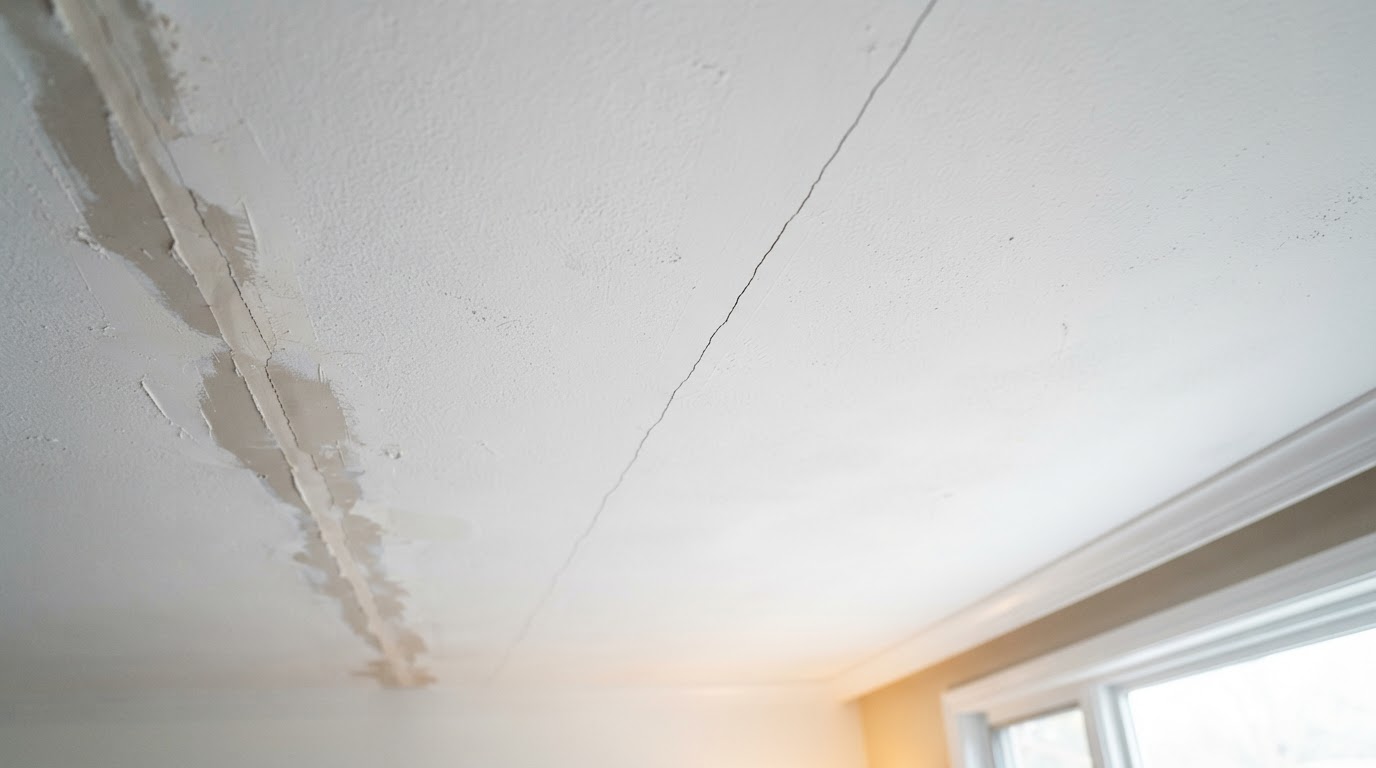
Drywall Ceiling Crack Repair in Waldorf, MD
A crack running across a ceiling is one of the most common drywall concerns Waldorf homeowners call about. Some ceiling cracks follow a taped joint and develop from normal framing movement; others appear where a fastener has loosened, where previous patchwork has failed, or where a roof or plumbing leak has affected the wallboard above. Willett Drywall inspects the crack, identifies what likely caused it, and repairs the ceiling drywall so the finished surface blends back into the surrounding area.
What a Drywall Ceiling Crack Is
A drywall ceiling crack is a visible break in the finished ceiling surface or in the taped joint system that connects ceiling panels. Many ceiling cracks follow the seams between sheets of gypsum board, where joint tape has loosened or the compound over a joint has pulled apart as the framing above moves with seasonal humidity. Others appear as short hairline fractures away from the joints, often the result of a fastener backing out or a localized stress point in the ceiling.
Not every ceiling crack points to a structural problem. A single hairline crack that follows a joint and has stayed the same for months is frequently a cosmetic issue at the finish level. Cracks that keep returning after repair, cracks that widen over time, or groups of cracks concentrated in one area may signal movement in the framing or the building above, and the underlying cause should be understood before the ceiling is refinished. Willett Drywall repairs the drywall; we do not diagnose foundation or structural conditions.
When This Service Is Needed
Common situations where ceiling crack repair is the right call for Waldorf-area property owners.
- A hairline crack has appeared along a ceiling joint
- A previous ceiling patch has separated or cracked again
- Joint tape is loose or lifting at a ceiling seam
- Cracks run along the joint between a ceiling and a wall
- A ceiling was repaired after a leak and the seam is now visible
- Multiple cracks have shown up near a single ceiling area
Common Causes of Ceiling Cracks in Waldorf Homes
Ceiling cracks come from a short list of common conditions. Understanding which one is present guides whether a simple refinish will hold or whether the cause needs to be addressed first.
Joint and Seam Movement
Seasonal humidity changes cause framing lumber to expand and contract, which works taped joints until the compound or tape loosens and a crack appears along the seam.
Loose or Raised Fasteners
A screw or nail that backs out of the framing can telegraph through the ceiling as a small bump or short crack around the fastener location.
Failed Previous Repairs
Older patches that were filled with brittle spackle or covered without re-taping often reappear as a crack exactly where the original damage was.
Ceiling-to-Wall Transitions
Cracks along the line where a ceiling meets a wall frequently develop where the two planes move independently, stressing the joint at the perimeter.
Moisture-Affected Board
Ceiling drywall that absorbed humidity or a past leak can weaken at the joint, producing cracks and stains near the affected area.
Recurring or Widening Cracks
Cracks that return after repair or grow noticeably over time may indicate ongoing movement that should be understood before cosmetic refinishing.
A single, stable hairline crack is often a finish-level issue. Recurring, widening, or clustered cracks may reflect movement beyond the drywall surface, and the underlying cause should be considered before repeated cosmetic repairs.
How Ceiling Crack Repair Is Completed Near Waldorf, MD
The right repair depends on what caused the crack and whether the surrounding ceiling is sound. The steps below describe a typical joint-crack repair from inspection to final finish.
Inspect the Crack
We examine whether the crack follows a joint, whether tape is loose, whether the board is firm or soft, and whether staining suggests a past or active moisture source.
Why it matters: Identifying the cause determines whether a simple refinish will hold or whether the ceiling board needs replacement.
Open the Joint
Where tape has failed, the loose tape and brittle compound are removed and the crack is opened slightly to give new compound a clean surface to bond to.
Why it matters: Compound applied over loose material re-cracks; a clean joint accepts the new tape and compound properly.
Re-Tape and Coat
Fresh joint tape is embedded in setting-type compound over the opened joint, then covered with feathered coats of joint compound that extend beyond the repair.
Why it matters: Reinforced tape and feathered coats restore the structural connection across the joint and blend the edges.
Sand and Texture
The repair is sanded flush with the surrounding ceiling, then texture is matched to the existing pattern so the repaired area blends into the field.
Why it matters: An untextured patch shows as a smooth spot; matching the surrounding texture hides the repair boundary.
Why Ceiling Crack Repair Quality Matters
A ceiling crack repaired with a quick fill of spackle tends to come back, because the crack almost always reflects movement or a failed joint that the surface fill did nothing to address. The repair has to re-establish the joint itself—new tape embedded in compound, fasteners re-seated where a raised screw is involved, and the board confirmed sound beneath. When that work is done correctly, the joint is reconnected and the surface is refinished flat, which is why the repair lasts rather than reopening within a season.
The finish matters just as much as the structure. On a ceiling, even a slightly raised patch edge or a poorly feathered ridge casts a shadow under recessed lighting or raking window light, drawing the eye straight to the repair. Texture matching closes that gap by blending the patched area into the surrounding pattern. Willett Drywall works from our Waldorf base on ceiling crack repairs throughout Charles County and the surrounding Southern Maryland communities.
New tape embedded in compound restores the structural bond across the joint instead of just filling the surface gap.
Compound is feathered out beyond the repair so the patched area sits flush and avoids casting a shadow under overhead light.
Texture is matched to the existing ceiling pattern so the repair blends into the surrounding field rather than showing as a smooth patch.
Related Drywall Services
Ceiling crack repair is part of a broader crack-repair and ceiling-repair family. These related pages cover the work that often surrounds a ceiling crack.
Drywall Ceiling Crack Repair FAQs for Waldorf Property Owners
Need Drywall Ceiling Crack Repair in Waldorf, MD?
Whether it's a hairline seam crack or a recurring crack that keeps coming back, Willett Drywall restores ceiling drywall throughout Waldorf and Charles County. Call 240-448-6692 or request an estimate to discuss the crack.