
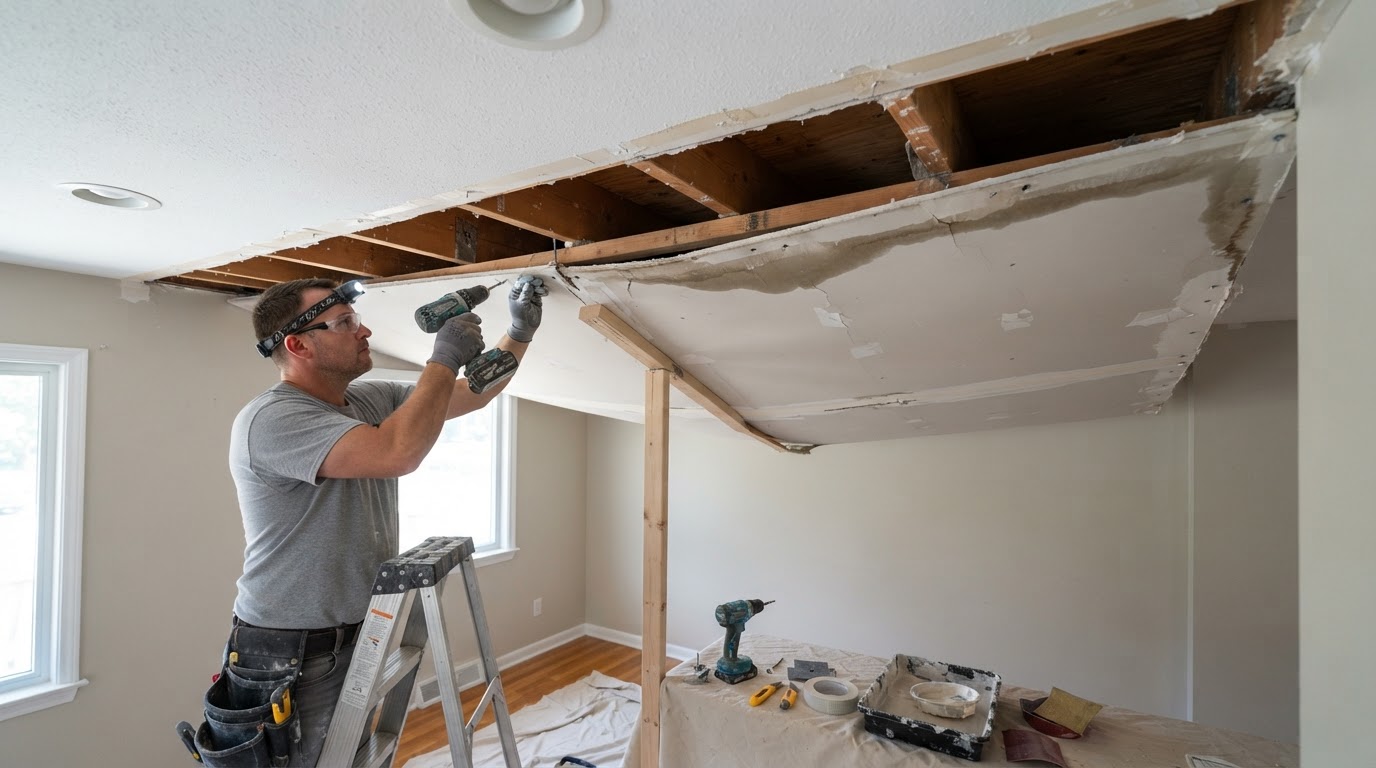
Sagging Drywall Ceiling Repair in Waldorf, MD
A ceiling that dips, bows, or sags between the joists is more than a cosmetic issue—it means the drywall is no longer held firmly against the framing above. Sagging can come from undersized board, fasteners that have loosened, moisture that has softened the gypsum, or framing that has shifted. Willett Drywall inspects the cause, secures or replaces the affected ceiling drywall, and refinishes the surface so the ceiling sits flat again for Waldorf and Charles County property owners.
What a Sagging Drywall Ceiling Is
A sagging drywall ceiling is one where the gypsum board has dropped below the framing, creating a visible dip or wave across the ceiling surface. Drywall is meant to be held tight against the joists by fasteners at the correct spacing, and when that connection fails—or when the board itself has weakened—the weight of the panel pulls it downward. The sag may be localized to one area or run across a wider section of the ceiling.
The cause determines the repair. If the board is sound but the fasteners have loosened, re-fastening and refinishing may be enough. If the board has softened from moisture or was installed undersized for the joist spacing, the affected panel usually needs to be replaced. Where moisture or a framing problem is involved, that underlying issue has to be corrected before the ceiling is permanently repaired, or the sag will return.
When This Service Is Needed
Common situations where sagging ceiling repair is the right call for Waldorf-area property owners.
- A ceiling dips or bows between the joists
- Ceiling drywall feels soft or spongy when pressed
- Fasteners have backed out of the ceiling
- A ceiling was installed with undersized board
- A moisture event has softened the ceiling board
- A ceiling panel has pulled away from the framing
What Causes a Drywall Ceiling to Sag
Sagging traces back to a short list of conditions. Identifying which one is present decides whether the ceiling can be secured or needs replacement.
Loose or Insufficient Fasteners
Fasteners that have backed out, or spacing that was too wide, let the board drop under its own weight over time.
Undersized Board
Half-inch board installed on ceiling joists spaced too far apart can sag between the joists; five-eighths-inch board resists sag over wider spans.
Moisture-Softened Board
Gypsum that absorbed humidity or a leak loses stiffness and sags under its own weight, often with staining or swelling.
Framing Movement
Joists that have deflected or shifted can pull away from the board, leaving the ceiling unsupported in spots.
Localized Panel Damage
A single panel that has cracked, separated, or been damaged may sag while the surrounding ceiling stays flat.
Old or Fatigued Board
Older ceiling drywall that has cycled through years of humidity can lose stiffness and develop a gradual dip.
Where moisture or a framing problem is present, the underlying cause should be corrected before the ceiling is permanently repaired. Willett Drywall secures and replaces ceiling drywall; we do not perform structural, roofing, or plumbing repairs.
How Sagging Ceiling Repair Is Completed Near Waldorf, MD
The repair follows the cause. The sequence below describes a typical ceiling that needs re-fastening and partial panel replacement.
Inspect the Ceiling
We determine whether the board is sound enough to re-fasten or whether moisture, undersizing, or damage means it should be replaced.
Why it matters: Re-fastening softened or undersized board won't hold; the panel has to be sound to secure.
Address the Cause
Where moisture or a framing issue is involved, the underlying source is corrected before the ceiling is permanently repaired.
Why it matters: Repairing over an active moisture source or loose framing means the sag will return.
Secure or Replace
Sound board is re-fastened to the joists at correct spacing; softened or undersized panels are cut out and replaced with appropriate board.
Why it matters: A firm connection to the framing is what holds a ceiling flat over time.
Refinish and Texture
Joints are taped and coated, the surface is sanded flat, and texture is matched so the repaired ceiling blends with the surrounding area.
Why it matters: Even a structurally sound repair shows if the finish isn't flat and the texture doesn't match.
Why Securing a Sagging Ceiling Properly Matters
A sagging ceiling is a structural drywall problem, not just a finish problem, and a surface repair won't address it. Adding compound over a dip just builds up a thicker low spot; the board is still loose above. The repair has to reconnect the board to the framing—re-fastening where the board is sound, replacing it where it has softened or was undersized—and only then refinish the surface flat. That is the difference between a ceiling that stays flat and one that sags again within a year.
The finish still matters once the structure is sound. A replaced panel that isn't feathered into the surrounding ceiling, or a texture that doesn't match, shows as a patch even when the board is firm. Willett Drywall secures or replaces the ceiling drywall and finishes it flat from our Waldorf base, serving property owners throughout Charles County and the surrounding Southern Maryland communities.
Sound board is re-fastened at correct spacing so the ceiling is held tight against the joists.
Replaced panels use board thickness suited to the joist spacing to resist future sag.
Joints are feathered and texture is matched so the repaired ceiling reads as one flat surface.
Related Drywall Services
Sagging ceiling repair is part of the broader ceiling-repair family. These related pages cover the work that often surrounds a sagging ceiling.
Sagging Drywall Ceiling Repair FAQs for Waldorf Property Owners
Need Sagging Drywall Ceiling Repair in Waldorf, MD?
A dipping or bowed ceiling needs to be reconnected to the framing, not just refinished. Call Willett Drywall at 240-448-6692 or request an estimate to discuss your ceiling.