Wet Drywall Removal & Replacement in Waldorf, MD
Once gypsum board has been saturated, it doesn't dry back to its original strength. The core swells, the paper loses its bond, and the panel sags or goes soft. Willett Drywall removes wet, swollen, and water-damaged drywall from Waldorf homes, dries the exposed cavity, and installs replacement board that's finished to blend with the surrounding wall or ceiling. The leak itself has to be corrected first—this page is about the drywall work that follows.
What Wet Drywall Removal and Replacement Involves
Wet drywall removal is the process of cutting out gypsum board that has been saturated by a leak, exposing the framing and cavity so they can dry, and installing new drywall in its place. Once drywall absorbs water, the gypsum core swells and loses its structural integrity, the paper face delaminates, and the panel often sags or goes soft. Replacing the damaged board—rather than drying and patching it—restores a sound, flat surface that won't harbor the effects of the saturation.
This work is the drywall side of a water event. The leak itself—plumbing, roofing, or an appliance—has to be located and corrected by the appropriate trade before the drywall is permanently repaired. Willett Drywall handles the removal, drying access, replacement, and finishing; we do not perform plumbing, roofing, water mitigation, or mold remediation.
When This Service Is Needed
Common situations where wet drywall removal is the right call for Waldorf-area property owners.
- Drywall is soft, swollen, or sagging after a leak
- Ceiling or wall board is stained and compromised
- Drywall paper has bubbled or delaminated
- A leak has been repaired and the wall needs rebuilding
- Wet drywall has been cut open for cavity drying
- Water-damaged board needs replacement before refinishing
Signs Wet Drywall Needs to Be Removed
Saturated drywall shows several clear signs. These are the conditions that usually mean replacement, not drying, is the right call.
Soft or Spongy Board
Drywall that yields when pressed has lost its core strength and won't regain it as it dries; the panel should be replaced.
Swelling and Bulging
Edges and seams that have swollen outward indicate the gypsum has expanded, leaving a panel that won't sit flat again.
Sagging Ceiling Panels
Ceiling drywall that has dropped after absorbing water is structurally compromised and typically needs replacement.
Discoloration and Staining
Brown or yellow stains show where water traveled through the board; stained, softened areas are candidates for removal.
Delaminated Face Paper
When the paper has separated from the gypsum core, the surface can't be refinished soundly and the board should be replaced.
Damaged Seams and Tape
Tape that has lifted and seams that have opened after saturation mean the joint system has failed along with the board.
The source of the moisture must be corrected before wet drywall is replaced. Willett Drywall performs the drywall removal, replacement, and finishing; the leak itself must be repaired by the appropriate trade.
How Wet Drywall Removal and Replacement Is Completed Near Waldorf, MD
The sequence runs from confirming the leak is stopped through finishing the new board. The steps below describe a typical wet-drywall replacement.
Confirm the Source Is Corrected
Before removal begins, the leak or moisture source is confirmed to be repaired so the new drywall isn't installed over an active water problem.
Why it matters: Replacing board over an active leak means the new drywall fails the same way.
Cut Out Damaged Board
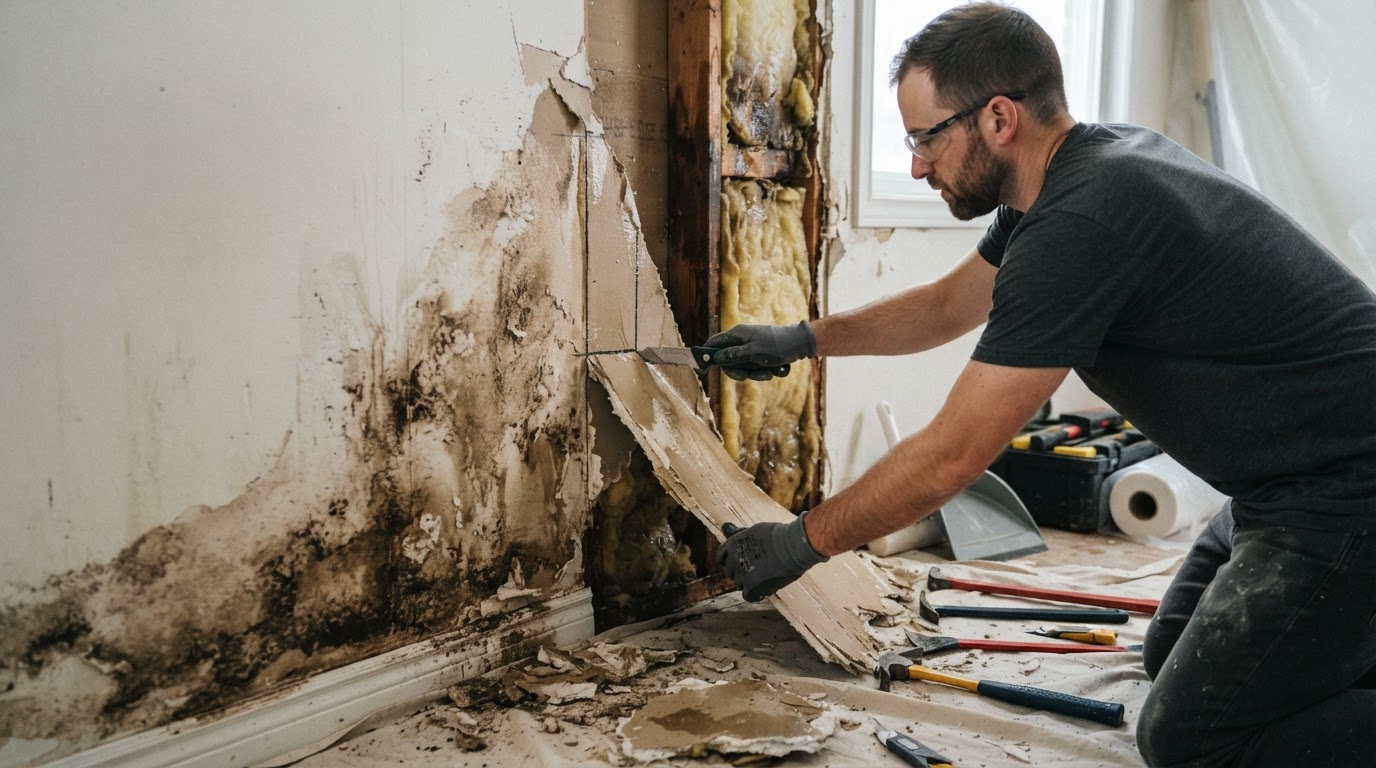
Wet, swollen, and stained drywall is cut back to firm, dry material, exposing the framing and cavity for inspection and drying.
Why it matters: Removing to a clean, dry edge gives the replacement board a sound surface to tie into.
Allow Drying and Inspect
The exposed framing and cavity are allowed to dry, and the area is inspected for any remaining moisture before new board goes up.
Why it matters: Enclosing damp framing traps moisture behind the new drywall and risks recurring damage.
Install and Finish Replacement
New drywall is cut to fit, fastened to the framing, taped, coated, sanded, and textured to blend with the surrounding wall or ceiling.
Why it matters: A properly installed and finished replacement restores a flat, sound surface that matches the rest of the room.
Why Removing Wet Drywall Matters
The temptation after a leak is to let the drywall dry and patch the stain. That works for a brief, light wetting on sound board, but saturated drywall doesn't recover. The gypsum core has swelled and lost its bond with the paper, the panel has often sagged, and the cavity behind it was wet. Drying the surface doesn't restore the core's strength or the paper's bond, and enclosing a wet cavity invites the same problem to return. Removing the damaged board, drying the cavity, and installing new drywall is what actually restores the wall.
The finish matters once the structure is sound. A replacement panel that isn't feathered into the surrounding wall, or a texture that doesn't match, shows as a patch even when the board is firm. Willett Drywall removes and replaces wet drywall from our Waldorf base, serving property owners throughout Charles County and the surrounding Southern Maryland communities.
Damaged board is cut back to firm, dry material so the replacement ties into a sound surface.
The exposed framing is allowed to dry before new board is installed, preventing trapped moisture.
Replacement board is taped, coated, sanded, and textured to match the surrounding wall or ceiling.
Related Drywall Services
Wet drywall removal is part of the water-damage repair family. These related pages cover the work that often surrounds a wet-drywall replacement.
Wet Drywall Removal & Replacement FAQs for Waldorf Property Owners
Need Wet Drywall Removed and Replaced in Waldorf, MD?
Once the leak is corrected, Willett Drywall removes the saturated board, dries the cavity, and installs replacement drywall finished to blend. Call 240-448-6692 or request an estimate.