
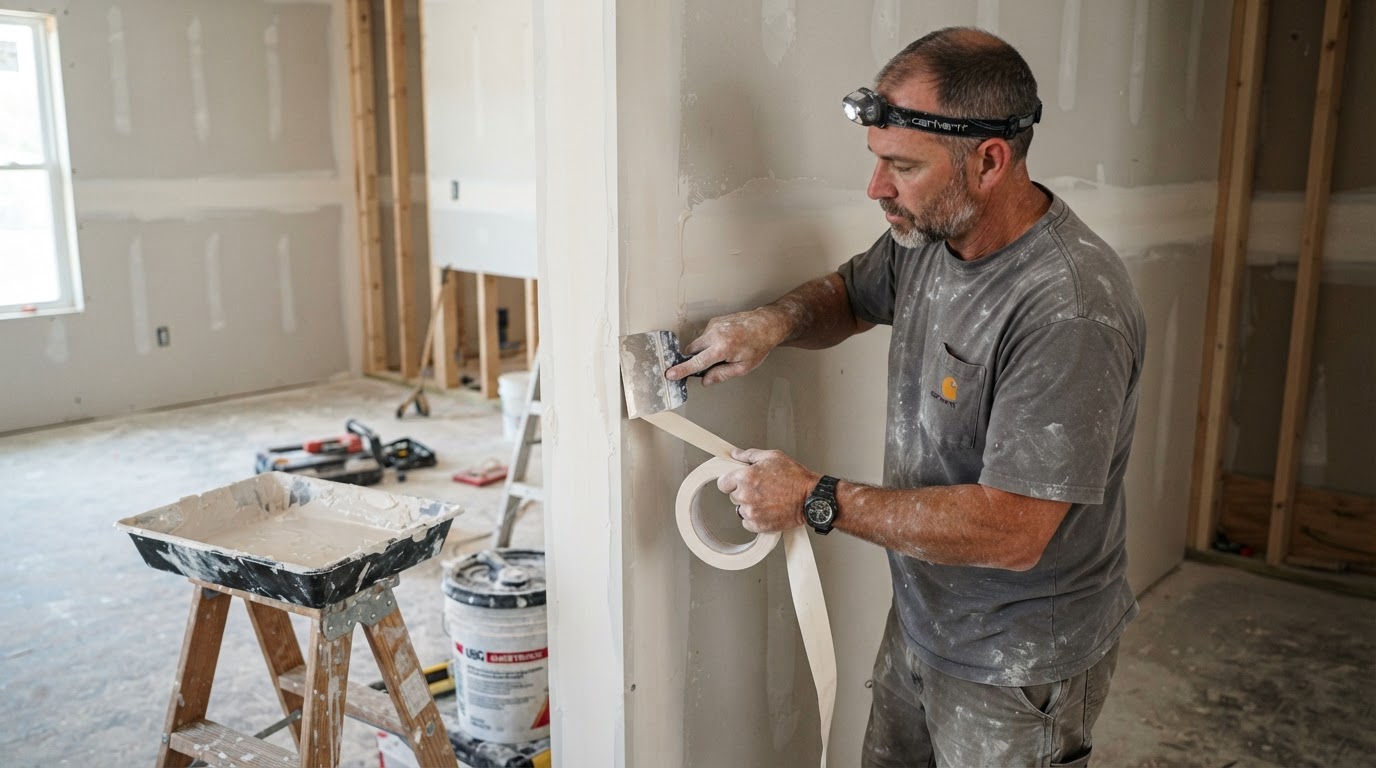
Drywall Corner Crack Repair in Waldorf, MD
Corners are where two walls meet, or where a wall meets a ceiling, and corners are also where drywall cracks show up most often. The inside corner is a taped joint; the outside corner is protected by a corner bead. When either one cracks, the cause is usually movement, a loose tape bond, or a damaged corner bead—and the right repair depends on which of those is involved. Willett Drywall repairs corner cracks throughout Waldorf and Charles County so the corner blends back into the surfaces on either side.
What a Drywall Corner Crack Is
A drywall corner crack is a break that runs along an inside or outside corner of a wall, or along the line where a wall meets a ceiling. Inside corners are finished with joint tape embedded in compound, and the crack there usually means the tape has loosened its bond or the compound has pulled apart. Outside corners are protected by a metal or vinyl corner bead, and a crack there often means the bead was dented, the compound over it chipped, or the framing behind the corner shifted.
The distinction matters because the repair is different. A loose inside-corner tape joint is re-taped and refinished. A damaged outside corner may need the bead repaired or replaced before the corner is smooth again. Knowing which condition is present is the first step in a repair that lasts.
When This Service Is Needed
Common situations where corner crack repair is the right call for Waldorf-area property owners.
- A crack runs vertically along an inside corner
- The line where a wall meets the ceiling is cracking
- An outside corner bead is dented or chipped
- Corner tape has lifted and is visible
- A corner crack keeps reappearing after filling
- An impact dented an outside corner
Types of Corner Cracks We Repair in Waldorf
Corner cracks fall into a few common categories. Each calls for a different repair approach depending on whether the problem is the tape, the bead, or movement at the intersection.
Inside Corner Tape Failure
Joint tape in an inside corner loses its bond and lifts or cracks, leaving a visible line along the vertical corner where two walls meet.
Outside Corner Bead Damage
A dented, cracked, or separated corner bead creates a visible flaw on the outside edge, often from impact or a loose fastener.
Wall-to-Ceiling Cracking
Cracks along the horizontal line where a wall meets the ceiling develop where the two planes move independently, stressing the taped joint.
Recurring Corner Cracks
Cracks that reappear in the same corner after filling typically reflect ongoing movement or a joint that was never properly re-taped.
Cracked Compound Over Bead
The compound applied over a corner bead can chip or crack, exposing the edge of the bead without the bead itself being damaged.
Movement at Wall Intersections
Where an addition or a remodeled wall meets an existing wall, the joint at the intersection can crack as the framing settles at a different rate.
Recurring or widening corner cracks may reflect movement in the framing or the building that should be understood before the corner is refinished. Willett Drywall repairs the drywall; we do not diagnose structural conditions.
How Corner Crack Repair Is Completed Near Waldorf, MD
The repair follows the condition. Below is the sequence for a typical inside-corner tape failure, which is the most common corner crack.
Identify the Condition
We determine whether the crack is loose tape, a damaged corner bead, or movement at a wall intersection, since each calls for a different repair.
Why it matters: Re-taping a corner with a damaged bead won't hold, and replacing a bead when the problem is loose tape is unnecessary.
Remove Loose Material
Lose tape and brittle compound are cut away from the corner, and any dented bead is reshaped or replaced so the corner has a sound edge.
Why it matters: New compound bonds to clean material; covering loose tape leaves the crack ready to reopen.
Re-Tape the Corner
Fresh joint tape is folded into the inside corner and embedded in setting compound, or the repaired bead is re-coated on an outside corner.
Why it matters: Reinforced tape restores the structural bond along the corner; a sound bead gives the outside corner a clean edge.
Feather, Sand, and Finish
Compound is feathered out onto both walls, sanded flush, and the corner is finished to blend with the surrounding surfaces and texture.
Why it matters: Feathering onto both walls hides the repair boundary so the corner disappears into the surrounding wall.
Why a Proper Corner Repair Makes a Difference
A corner crack is difficult to hide with a surface fill because corners catch light from two directions at once. A raised edge, a ridge of unfeathered compound, or a mismatched texture in a corner shows up under side lighting or any angle where the wall is viewed from across the room. The repair has to be flat, feathered onto both surfaces, and reconnected at the joint so the corner reads as a clean intersection rather than a patched seam.
For outside corners, the bead itself has to be sound. Compound built up over a dented bead eventually chips back to the dent. Repairing or replacing the bead first, then coating it flush, gives the outside corner a crisp edge that holds up to the contact corners see from furniture, doors, and foot traffic. Willett Drywall handles corner crack repair from our Waldorf location for property owners across Southern Maryland.
Inside corners are re-taped with embedded tape so the joint regains its bond rather than just being filled at the surface.
Outside corners are repaired with a firm bead edge so the corner stays crisp and resists the next impact.
Compound is feathered onto both surfaces meeting at the corner so the repair blends from every viewing angle.
Related Drywall Services
Corner cracks connect to the broader crack-repair family. These related services often appear alongside corner work.
Drywall Corner Crack Repair FAQs for Waldorf Property Owners
Need Drywall Corner Crack Repair in Waldorf, MD?
From a loose inside-corner tape line to a dented outside corner bead, Willett Drywall restores corners throughout Waldorf and Southern Maryland. Call 240-448-6692 or request an estimate to discuss the crack.